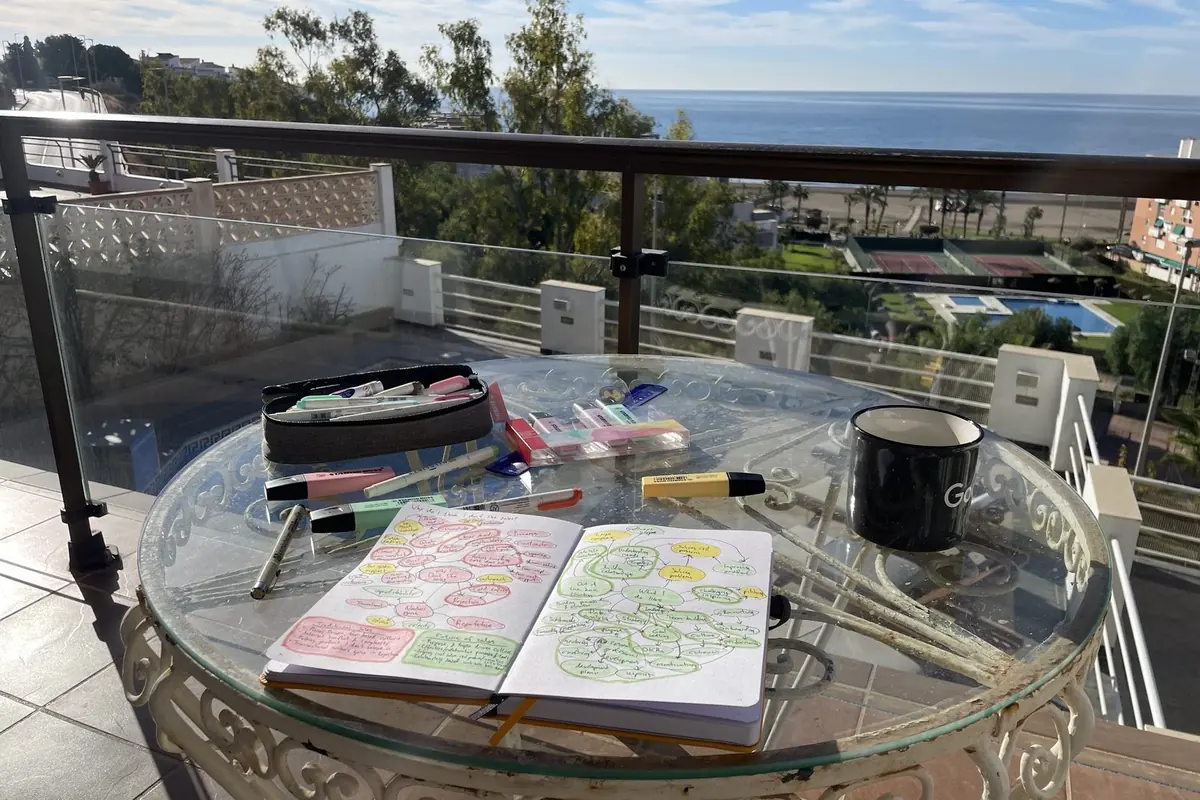
You have a shortlist. Two or three career options, maybe more. Each one makes sense on paper. You have made the pros and cons list. You have asked your friends. And you still can't choose.
I know that place well. I spent weeks going back and forth between two careers that both fit me. More thinking did not help. Trying the work did.
So here is the short answer to how to decide on a career change when you are stuck between options. Stop trying to think your way to the answer, and test the options in real life. Run a small, low-risk experiment with each one and notice how it feels while you do it. Then choose the one that feels most natural, and commit to it for the foreseeable future, not forever.
Why a pros and cons list won't make the decision for you
Imagine I put three dishes in front of you that you have never tasted. One is Thai, one Ethiopian and one Peruvian. You get a menu with every ingredient, the reviews, and ten people who have eaten each dish. I even throw in a personality test to find your ideal cuisine.
So you build a spreadsheet. Spice, novelty, fit with your values. Peruvian wins on the weighted score. But we both know you tweaked the weights.
Then I ask which one you prefer. You still have no clue.
You are missing the one thing that matters: what happens when you put the food in your mouth. For that, you have to take a bite.
Career decisions work the same way. We research, compare salaries and build spreadsheets. Then we sit at the kitchen table with seventeen tabs open and feel less sure than when we started.
The problem isn't that you didn't think hard enough. The problem is that you're trying to obtain information by thinking, when you can only obtain it through experience. Through sensing the options.
From The Art of Reinvention
There is a second problem. Your imagination shows you the trailer, not the whole movie. The café you dream about has morning sun and the smell of fresh coffee. It doesn't have a broken dishwasher, an employee calling in sick, or you doing inventory at 10:30 on a Tuesday night.
Herminia Ibarra, author of Working Identity, spent decades studying career transitions. We think the order is: know who you want to become, decide, then act. In real life, people try things, meet different people and experiment with possible identities first. Doing comes before knowing. I wrote more about this in why you can't think yourself to the answer.
Test each career option with a small experiment
I learned this the expensive way. Years before coaching, I started a company called NY Food Box. Every week we would deliver a box of ingredients and recipes to people in Manhattan, so they could make restaurant food at home. We built the website, the backend and the kitchen logistics, and launched.
Nothing. Not even the friends who said they loved the idea placed an order. It took me two full years to realize that no one moves to Manhattan to cook.
A simple website with no backend would have told us the same thing in about a week. This is called a minimum viable product, or MVP. It is the smallest thing you can build that gives you real evidence.
The same logic works for a career decision. Every option on your list is a guess. "I think I'd enjoy coaching." "I think I'd like living in Spain." So test a small version of each guess before you build a life around it. These were my tests:
- Coach for thirty days
- Work remotely from Spain for three months
- Write 2,000 words every day for a week
You don't have to quit anything to run a test like this. Misty, one of the people in my book, wanted to know what it would feel like to make money from her art. She ran her test on evenings and weekends, while her project management job paid for her life. There is a full guide on how to try a new career before you quit.
How I decided between consulting and coaching
After only five of my 50 Lunches, four of the people I spoke with pointed me toward coaching. I hadn't even listed it as something I could get paid for.
But I was choosing between two options that both fit my Ikigai: consulting, or coaching. I knew very little about coaching. Am I good enough? Could I really charge for it?
My core value of adventure pulled me toward coaching. My self-doubt pulled me back toward consulting. I went back and forth for days. Then the days became weeks.
Two conversations helped. In the first, I talked through the sensible option: becoming a senior adviser to leadership teams. I had twenty years of experience across technology, consulting, leadership and HR. Companies would pay well for it. A fellow coach listened, then asked me how that option felt in my body.
I felt nothing. I could explain exactly why it made sense, but I couldn't find any love for it.
In the second conversation, someone asked which one I would choose if money would never be a problem again. "Coaching." The answer came instantly.
I still needed evidence, so I ran what I call a Dress Rehearsal. After the fifteenth podcast episode, I published a video and gave myself thirty days to find my first clients. My first paying client arrived before I had finished editing the video.
And I loved it. It wasn't all rosy. After the first two clients, finding new ones got hard, and I was back on LinkedIn creating content. But I kept a tracker, and it showed a lot more positive days than negative ones.
Somewhere before those thirty days were over, the decision made itself. It felt more like knowing.
Why the option that feels easier is often the right one
A researcher named Kaitlyn Werner and her colleagues published a paper with a great title: Some Goals Just Feel Easier. They asked 176 university students to name three goals for a semester. Over the following months they checked how easy each goal felt, how much effort the students put in, and how much progress they made.
The goals that fit the students best felt easier. And that feeling of ease, more than extra effort, helped explain why they made more progress.
Most of us were taught the opposite: if something matters, it should be hard. For most of my career I picked the biggest, hardest goal I could imagine.
Easy doesn't mean effortless. Coaching still takes work. Writing my book did too. But when something feels easy for you, it usually means it fits who you are and what you are good at. You are more likely to enjoy it and keep at it. That makes you more likely to succeed.
So if you are stuck between several good options, choose the easy one.
How to decide on a career change when you're stuck between options: the Obvious Choice exercise
This is the last exercise in the Sense section of the book.
- Get your journal and go through your earlier notes. Copy only what feels most important right now. It should all fit on one page.
- Start with your core values and your True Self. Add the parts of your Ikigai that feel relevant.
- Add what you learned from your conversations and experiments. Which options kept coming back? How did each test feel?
- Read the page as if a friend had handed it to you and asked what they should do next.
- Finish this sentence: "The obvious next thing for this person is..."
You'll usually know whether it's right as you write it down.
If two options are still standing, ask one more question: If money were never an issue, which one would you choose? By now you have already asked the money questions. An option wouldn't still be on your list if you didn't believe you could live from it.
All 18 exercises from the book are on the book tools page.
Choose one option for the foreseeable future, not forever
Staying open is useful for a while. But you can spend years having interesting conversations, taking courses and keeping every option open. At some point that stops being exploration and becomes hesitation.
The point of testing is to reduce the uncertainty enough to make a better decision. You will never remove all of it.
You also don't have to decide what you'll do for the rest of your life. You have changed before, and you will change again. So shrink the commitment from "forever" to "for the foreseeable future".
Here is the sentence I give readers: "Based on everything I know, this is what I want today."
Then say it to a friend or someone you love. Say it as a decision. "I'm moving into sustainability." "I'm becoming a photographer." Notice how the next question changes. It stops being "What do I want to do?" and becomes "How do I make this real?" Telling people is the next step, and I cover it in how to explain a career change.
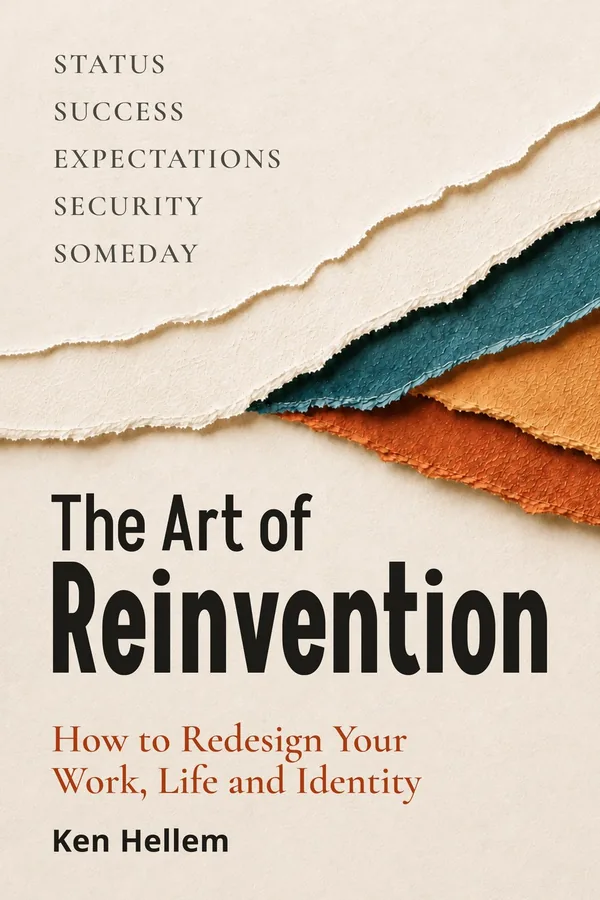
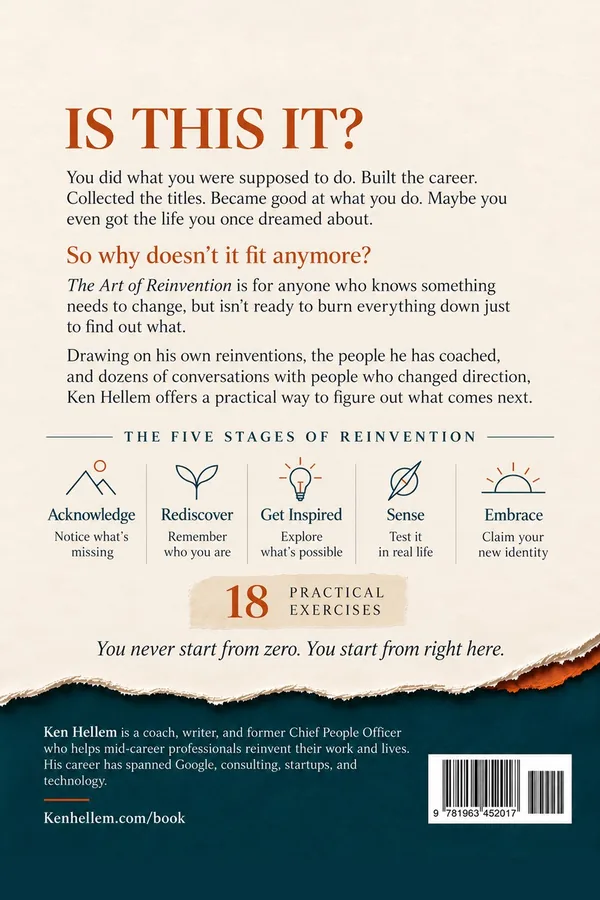 Hover for the back. Click for the book.Tap to see the book
This post comes from two chapters in the Sense section of The Art of Reinvention: "You Can't Taste a Spreadsheet" and "Decision Time". The same section shows you how to design your own experiments. You can find the book here.
Questions people often ask
How do I choose between two career options?
Test both before you decide. Run a small experiment with each one, like a few weeks of part-time work, a side project or a paid trial client, and notice how it feels while you do it. The option that feels more natural and gives you energy is usually the better fit. If you are still torn, ask which one you would pick if money were never an issue.
Should I use a pros and cons list to decide on a career change?
A pros and cons list is a fine place to start, but it can't make the decision for you. It only uses information you can get by thinking. The most important information, how the work actually feels to you, only comes from trying it.
What if I'm scared of making the wrong career decision?
Make the decision smaller. You don't have to choose for the rest of your life, only for the foreseeable future. Something like "Based on everything I know, this is what I want today" is honest, and you can change again later. Small experiments first also lower the risk of a bad choice.
How long should I experiment before I decide on a new career?
Long enough to get past the imagined version of the work. For me it took about thirty days of real coaching with real clients. But don't let experimenting go on for years. At some point it stops being exploration and becomes a way to avoid choosing.