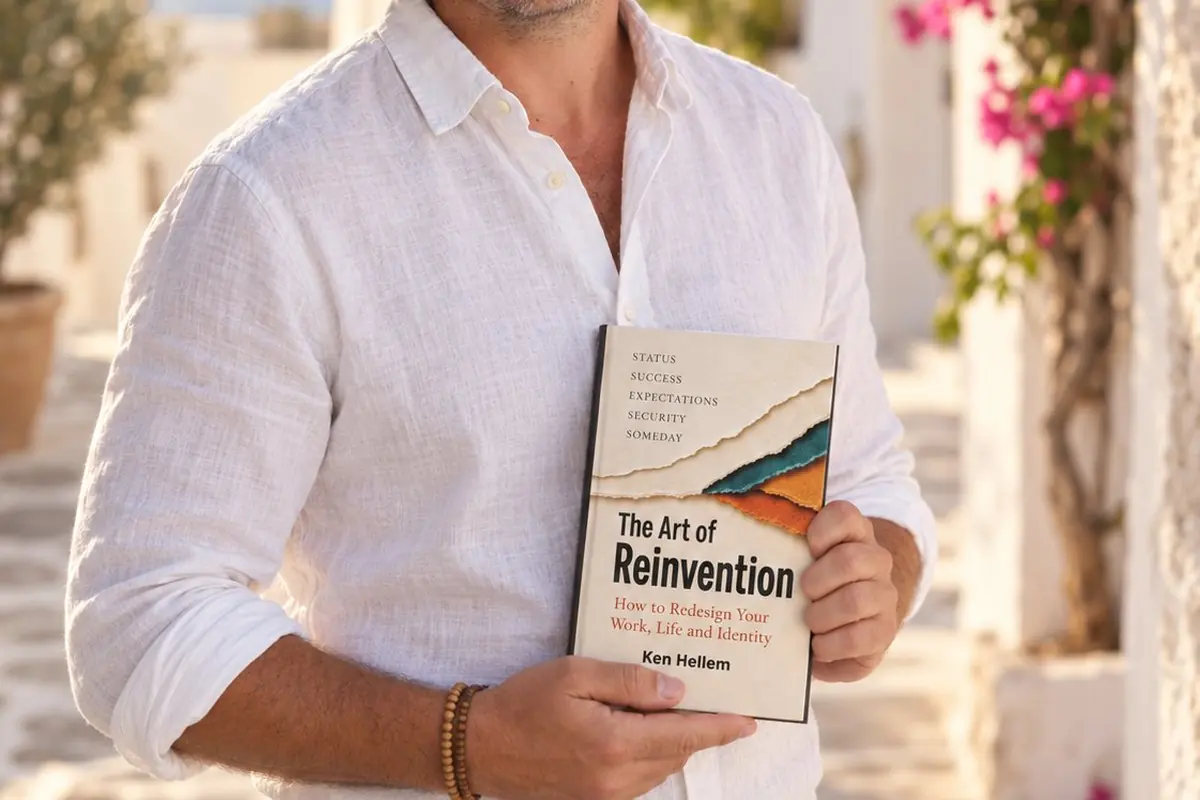
"Let me reintroduce myself. My name is Ken and I am a Guide."
That sentence was a lot harder to say out loud than I expected. The first few times I tried, I felt ridiculous. I knew it was true. I had spent months on it. I had even tested coaching in real life and been paid for it. Still, the words felt strange in my mouth.
If you have changed careers, or you are about to, you probably know this feeling. So how do you explain a career change to people? Tell it as a short story in three parts: who you were and why that life stopped fitting, what you tried and learned, and who you are now. Then introduce yourself with one short, present-tense label, followed by one plain sentence about what it means. Say it without apologizing, and keep using it until it feels normal.
Why introducing yourself after a career change feels so awkward
"I think I might want to be a coach" is a safe sentence. It leaves the door open. You can change your mind tomorrow and nobody will notice.
"I am a Guide" is a claim. And nobody has given you permission to make it.
There is no graduation ceremony when you finish a reinvention. Nobody hands you a certificate that says you are now allowed to be this person. You don't get a new title to put on your CV.
Meanwhile, your old identity took years to build. You used it to introduce yourself at parties. You put it on LinkedIn and printed it on business cards. Maybe even in Japanese.
Your new identity is new. Of course it feels strange. Your story simply hasn't caught up with you yet.
Psychologists Dan McAdams and Kate McLean use the term narrative identity for the story we tell about who we are. It connects the past we remember with the future we imagine. That helps me, because a career change doesn't erase anything. I am still the kid from Norway who wanted to be an international businessman. I am still the consultant, the startup guy, the Googler and the people leader. Those are just earlier chapters. I wrote more about this in you own your own narrative.
How to explain a career change to people: tell it in three acts
Before you explain your change to anyone else, explain it to yourself on paper. I use an exercise with my coaching clients called Your Three Acts. It is loosely based on Joseph Campbell's hero stories: the old life, leaving it, and coming back changed. But there are no dragons, and you don't have to save a kingdom.
Use a computer this time rather than a notebook. These tend to go long, and you will want to edit. Write at least a full page per act.
- Act One: Who were you? Describe the person you were before the change. What was working? What felt off? Then answer the harder question: why did you no longer want to keep living that version of your life?
- Act Two: What did you actually do? Write down what you tried and learned. Your values and how you found them. The people you talked to. The options that came up, the ones you tested, and what those tests taught you.
- Act Three: Who are you now? Write it in the present tense. Start with: "Let me reintroduce myself. My name is ___, and I am a ___." Then explain what that means. What are you good at? What do you care about? How do you want to spend your time?
A few things I have learned from doing this with clients.
In Act One, you don't have to turn your old life into a disaster to justify leaving it. Maybe you had a good job. People thought I was crazy to leave my dream job at Google. But I had other needs that were more important.
Reinvention does not require you to prove that the past was bad. It only requires you to admit that it's no longer the life you want to live.
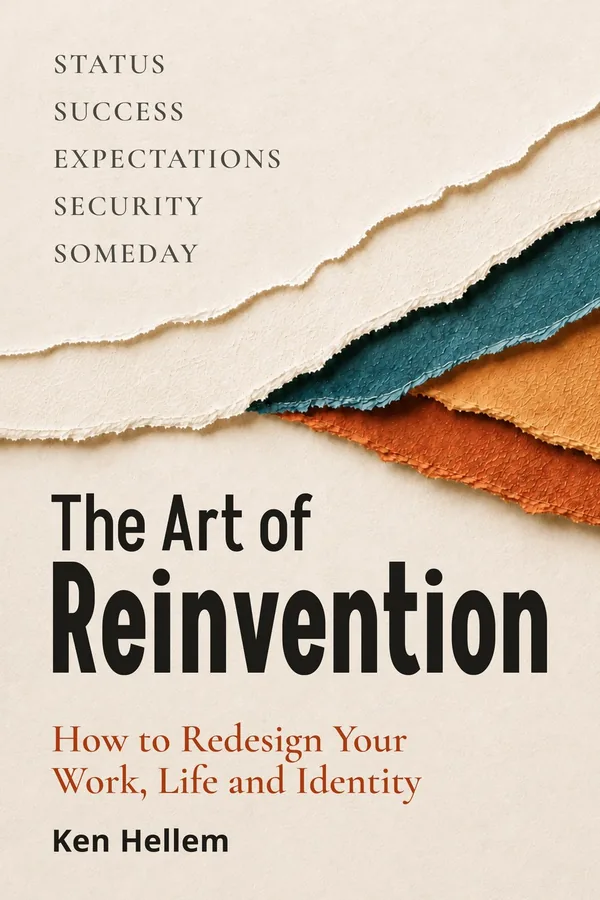
From The Art of Reinvention
Act Two is your evidence. Some people wake up one day and announce that they are changing their life. You got here after weeks or months of work. That is a big difference. When your brain later asks whether you have lost your mind, you can go back and read what actually happened.
Act Three is the uncomfortable one. Leave out "I would like to become", "I am thinking about" and "I am exploring". Those phrases were useful earlier because they kept things open. Now they only help you avoid committing. And don't write a five-year plan. A plan lives in the future, so you can keep postponing it. Describe the person you have decided to be for the foreseeable future.
Your story doesn't have to be impressive. Maybe you left a twenty-year career and moved across the world. Maybe you stayed in the same job and stopped letting it control your life. Both count.
How to introduce yourself in your new role
Your introduction has two parts. A label, then one line.
The label is short. For me it is "I am a Guide". Guide is my True Self Archetype. If you don't know yours yet, the True Self Archetypes quiz is a good place to start. Your label could also be a role, like "I'm a photographer".
When you use your label, you will get a look. "Guide" sounds like I take people up mountains. I have been asked more than once whether I do walking tours.
That look is useful. It gives you room for a second sentence, and the second sentence is the real introduction. Mine is that I help people work out who they actually are, and then build a life around it.
Raphael, one of the people in the book, does the same with his label, Warrior. He says he is a lawyer who fights for people facing injustice. People remember that.
So write your second sentence now, before you need it. If your old job title still feels like your whole identity, this post on who you are without your job title might help.
Practice saying it out loud before you tell anyone
Writing the story is one thing. Hearing yourself say it is another.
Take out your phone and record a video of yourself reading your three acts out loud. Nobody else has to watch it. One take. Don't rehearse, and don't start again when you stumble.
Then watch it. Most of it will sound natural. But there may be one sentence where something changes. You speed up. You laugh. You look away. Your voice gets quieter.
Pay attention to that sentence. Sometimes it is the thing you don't quite believe yet. Sometimes it is the thing you believe so strongly that saying it out loud suddenly makes it real.
For me it was "I am a Guide". I could talk about Google, startups, leadership, coaching and the camper van for hours. Those four words were harder.
So I changed my intro slightly. Now it goes: "Hi, I'm Ken. I'm a Guide. That's who I am. That's who I've always been."
What happens when you tell people about your career change
The last step is saying it to another human being. Not your coach. Not your cat. Not the mirror.
You don't need a big announcement. Just use it in a normal conversation. The next time someone asks what you do, don't fall back on your old title. And don't give them the long, apologetic version where you explain that you are still figuring things out. Start with your new introduction.
If a friend asks what has been going on, give them a short version of your three acts:
"I realized my old life was no longer right for me. So I did all this work and learned that... I discovered that I'm actually a... And now I'm writing, coaching, building..."
At first I was scared people would call my bluff. That they wouldn't believe I am who I say I am.
Nobody ever challenged it. Most people are too busy thinking about themselves. Most just accepted it. Some applauded the courage. Some asked polite follow-up questions. And a few offered to help.
It will feel awkward the first few times. Each time you use it, it feels a little more real, until it is the most natural thing in the world.
Saying it out loud doesn't mean you fully believe it yet. If something is still holding you back, I wrote about checking whether your limiting beliefs are really true.
 Hover for the back. Click for the book.Tap to see the book
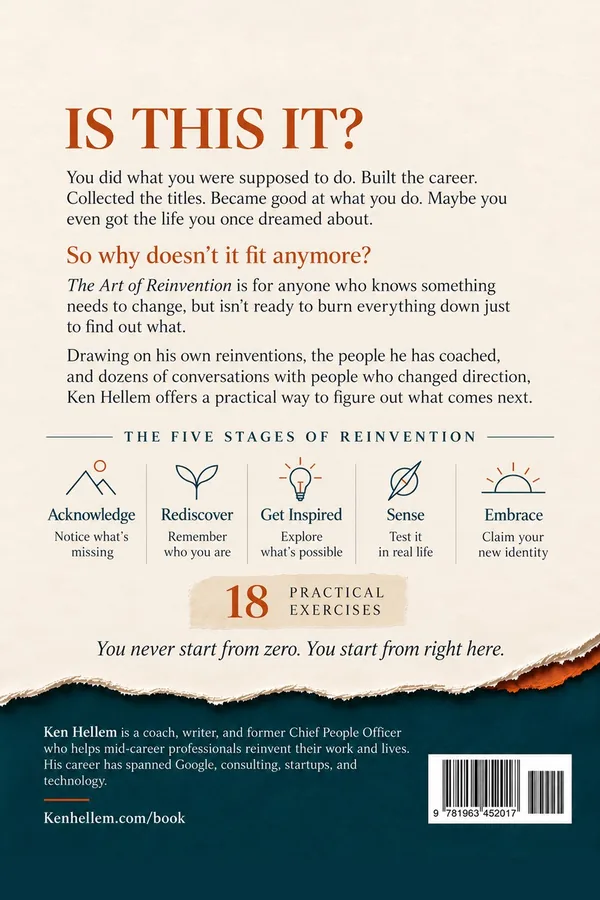
This post comes from the chapter "Let Me Reintroduce Myself" in the Embrace section of The Art of Reinvention. The chapter has the full Three Acts exercise, with more questions for each act. You can find the book here.
Questions people often ask
How do I explain my career change in a job interview or conversation?
Keep it to three short parts: what you did before and why it stopped fitting, what you tried and learned, and what you do now. Say the last part in the present tense. You don't need to make your old job sound bad. It is enough to say it was no longer the life you wanted.
How do I introduce myself after changing careers?
Use a short label, then one sentence that explains it. For example: "I'm a Guide. I help people work out who they actually are, and then build a life around it." Skip "I'm thinking about" or "I'm exploring". Say who you are now.
Why does it feel so awkward to talk about my new career?
Because your old identity took years to build and your new one is new. Nobody gives you a certificate saying you are now allowed to be this person. The awkwardness fades with use. Each time you say it, it feels a bit more real.
What if people don't take my career change seriously?
In my experience, almost nobody challenges it. Most people just accept what you tell them, some ask follow-up questions, and a few offer to help. If you are worried, practice first by recording yourself on video, so you hear how it sounds before you say it to someone else.