
When I quit my job and rented out my apartment, I took a camper through southern Europe. The plan was to figure out what to do "the next time I grow up". I thought the big question was about work. What do I want to do next?
It wasn't. The question I kept coming up against was "Who am I?" And right behind it: "Who do I want to be?" I even wrote a song about it on that trip.
If you're asking yourself who am I without my job title, you're not alone. Here is the short answer. Most of us tie our identity so closely to our work that losing the title feels like losing ourselves. But most of who you are was in place long before your first job: your personality, your natural abilities and your values. To find yourself again, you go back to that person and build your next step around them.
Why losing your job title can feel like losing yourself
In my book I tell the story of Paige. She quit her dream job with no plan. That took real courage. You would think the story ends there, with her feeling free.
It didn't. What came after was the hardest part of her whole reinvention.
Without a title and a calendar full of work tasks, she no longer knew who she was. Like most of us, she had identified so strongly with her job that when she jumped she didn't feel free. She felt lost.
From The Art of Reinvention
Paige calls that time the dark night of the soul. She says it was the first time in her life she felt truly depressed. I wrote more about that dark stretch after a career change in a separate post.
Her problem was never seeing that something was wrong. She saw it, and she acted on it. But knowing what is wrong doesn't tell you what is right.
A job title does a lot of work for you. It answers "So, what do you do?" in one line. It tells people how to treat you. It fills your calendar. When it's gone, all of that goes with it, and you're left with the bigger question underneath.
How we build identities to fit in
Think about yourself as a young kid. You didn't think about identities. You woke up and did whatever felt natural and fun. Maybe you loved animals, or performing, or building things. Nobody told you to.
My brother was the active, sporty, noisy one. I was the nerdy one. I read books and tried to figure out how things worked. In school I sat in the first row and asked questions. I also helped my friends with their homework. I didn't do it for them. I helped them learn how to think.
Then, around the age of 10 or a little later, something changes. You start to notice what gets praised. What your parents are proud of. What your friends think is cool. And without ever deciding to, you start to adapt.
That is normal. A child has to fit in. But the changes pile up, one layer on top of another. The reliable one. The tough one. The successful one. I think of these layers as suits. You put them on to get through life, and for a long time they work.
I wore one for years. I told myself I was going to be an international businessman, or in more modern terms, an entrepreneur. I wanted fast growth and money. My ego wanted the fame that comes with building something people notice. The world around me rewarded that suit, so I kept wearing it.
Meanwhile I forgot the kid in the first row, the one who just wanted to help others learn and grow. At 12, I hid him because he wasn't cool. Later I forgot him because I was so busy being someone else.
Here's the tricky part. A suit can be very strong and still be wrong for you. Years of effort, praise and habit hold it in place. You can be successful in it and still feel that something is off. At first, success drowns out that feeling. Over time it gets louder, until you catch yourself asking: is this it?
Who you are was mostly set before you were 10
So what is under all the suits? According to the research, quite a lot, and most of it was there early.
The Dunedin study in New Zealand followed a thousand children from age 3 into adulthood. Researchers noted who was bold, who held back and who couldn't sit still. They checked again at 18 and at 26. The confident 3-year-olds grew into confident 26-year-olds. The cautious ones stayed cautious. The pattern didn't fade with time.
A 2025 study in American Psychologist compared identical twins, so genes could not explain the difference. The twin who got more warmth from their mother between the ages of 5 and 10 grew up a little more open, more careful and easier to get along with by 18.
And the psychologist Kevin Hoff and his colleagues ran a study twice. Both times they compared people's interests as teenagers with the jobs they had twelve years later. The closer the match, the more satisfied people were with their work.
Put simply: your personality, your natural abilities and your core values were mostly in place when you were young. They can drift, and they can get covered up. They don't turn into something else.
You have probably felt this already. Some tasks drain you even though you're good at them. Other tasks give you energy even when they are hard. The first kind goes against your nature. The second kind is you, acting as your True Self. I wrote about this in why your best skill might be draining you.
How to find out who you are without your job title
Most people skip this question. I know I did, several times. I jumped straight to solutions. Once, in Tokyo, I gave myself a placeholder goal instead of figuring out what was really missing. It worked for a while. But every day on the wrong path adds another layer.
So before you pick your next job, start here. This is the first exercise in the Rediscover part of my book. I call it That's Just How She Is.
- Go back to when you were a kid, before you tried to fit in.
- Ask yourself one question: what did you do that nobody asked you to?
- Remember what the adults said about you. "That's just how she is." "That's just him." What were they talking about?
- Look for small, ordinary things. Maybe you organized games for your friends. Maybe you drew on everything. Maybe you talked to every stranger, or took machines apart to see how they worked.
- Don't force it. Carry the question with you for the next couple of days, and write down whatever comes up.
This can be hard. The things that come most naturally are the hardest to see. It's like breathing. You do it all day, but you never say to yourself "great breath". Your natural abilities work the same way. You use them all the time, so they don't feel like a big deal.
That is exactly why they are a big deal. Whatever you find is a strong clue about who you are without the title.
When you have your answer, you can go further. The True Self Archetypes quiz helps you name the person you were before the world got in the way. And your values tell you what matters most when you make big decisions. Here's how to find your core values.
You will keep changing, and that's fine
This can sound like a contradiction. You will keep changing. You will do things the 10-year-old you could never imagine. I am not the same man I was at thirty, and I hope I won't be the same at sixty.
But underneath all of that, the same kid is still there. A personality, a set of natural abilities and a group of core values. Your job title will change many times. That kid won't. Build your next step on the kid, and the title matters a lot less.
Read the full chapter
This post is built on "Who Are You? Really?", the chapter that opens Rediscover, the second step of the ARISE method in The Art of Reinvention. The chapters that follow help you find your True Self Archetype, your values, and your strengths, so you can explain them to yourself and to others.
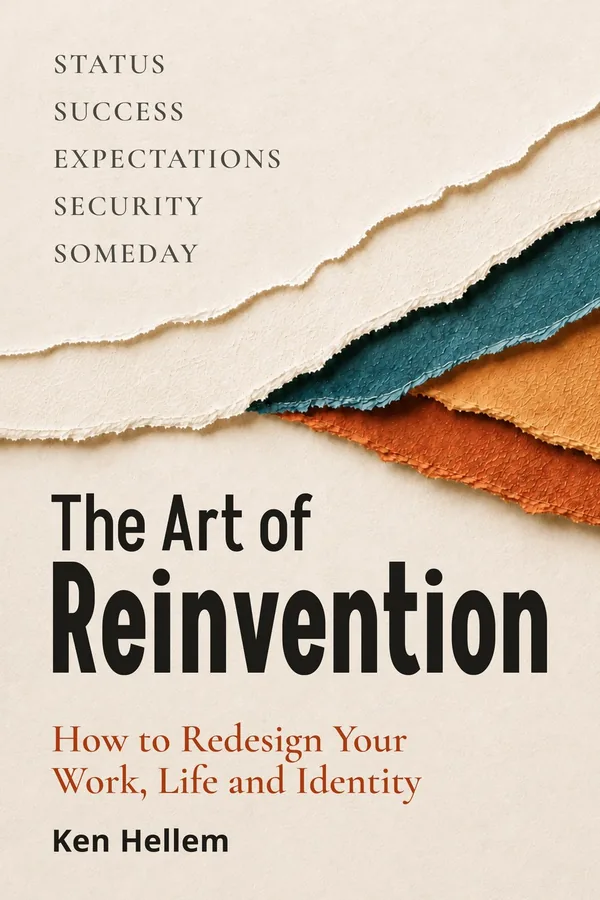
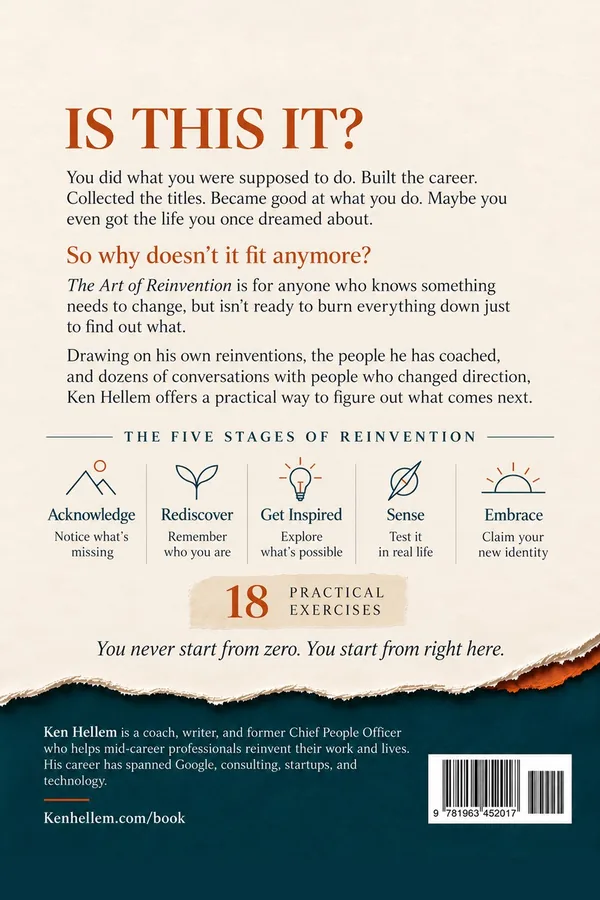 Hover for the back. Click for the book.Tap to see the book
If you want the whole process, the book is here.
Questions people often ask
Why do I feel lost without my job?
Because for years your job answered the question "who are you?" for you. It gave you a title, a calendar and a way to explain yourself in one line. When it's gone, the bigger question underneath shows up. Feeling lost at that point is very common, and it usually means you are finally looking at who you are, not what you do.
Is it normal to lose your sense of identity after leaving a job?
Yes. Most of us tie our identity closely to our work, so leaving can feel like losing ourselves, even when we chose to leave. One woman in my book quit her dream job and says it was the first time in her life she felt truly depressed. It's a hard stretch, and it's also the start of finding out who you are underneath the title.
How do I separate my identity from my job title?
Go back to who you were before any job. Ask yourself what you did as a kid that nobody asked you to do, and what the adults said was "just how you are". Then look at which tasks give you energy even when they are hard. Those clues point to your personality, your natural abilities and your values, which stay with you whatever your title is.
Can your personality really change as an adult?
It can drift, and it can get covered up by years of fitting in. But long studies, like the Dunedin study in New Zealand, found that the traits children showed at age 3 were still there at 26. So most of who you are was set early. That's good news, because you can use it to choose your next step instead of fighting it.