
A couple of years ago I quit my job. I spent six weeks trying to build something new, and when that didn't work, I bought a camper van and hit the road. No running water. No air-conditioning. Just me, my guitar and a journal.
I traveled for about six months through Spain, Portugal, France and Switzerland. People still ask me about the van. But in this post I want to talk about the break itself.
So what is a micro-retirement? A micro-retirement is a planned break from work in the middle of your career, taken to rest and to look at your life from the outside. Instead of saving all your free time for when you retire, you take some of it now. Should you take a career break? If you feel stuck and can't see your own life clearly, you probably need some kind of break. But it doesn't have to mean quitting your job. And it definitely doesn't have to mean buying a van.
Where the idea of a micro-retirement comes from
The idea isn't mine. Tim Ferriss wrote about "mini-retirements" in The 4-Hour Workweek. His idea was to rest, travel, enjoy life and learn new skills while you're still young and healthy, instead of saving all of it for retirement.
I like that idea a lot. I try to take a break like this every three to five years. The van trip was by far the longest one.
But I add one thing to Ferriss's idea: time to reflect. Fun, travel and rest are all part of my breaks. The main purpose, though, is always to think about my life. And to get enough distance to see it from the outside.
I find that it's almost impossible to reflect objectively upon your own life when you're in the middle of living it. You're too busy running toward that next goal or milestone to evaluate if you're even running in the right direction.
From The Art of Reinvention
That's the main reason to take a career break. A normal vacation helps you recover from work. A micro-retirement gives you the time to ask if you still want the life you're going back to.
Should you take a career break or quit your job?
This might surprise you, coming from a guy who lived in a van. Please don't buy a van. And please don't quit your life.
Most people can't step away like that, and most don't need to. Your employer might not allow it. You might have kids in school. You might not be able to afford it, especially if you're already between jobs and need to hold on to your savings.
I have seen families with kids take a time out and figure it out along the way. But I wouldn't recommend that to most people. In most cases I wouldn't even recommend quitting your job. It doesn't have to be that dramatic.
What you do need is time away from your normal days. You can't figure out who you are in the gaps of a packed calendar. Between meetings, emails, family and friends, there is no room left to think.
So the useful question is how much time you can realistically take, and how you will use it.
How to take a micro-retirement that fits your life
Start with the biggest break you could realistically take. If that doesn't work, go one step down the list until you find one that does.
- A sabbatical. Great if your employer offers one and you can pull it off.
- A long vacation. Spent somewhere quiet, not on a packed itinerary.
- A long weekend. At a friend's cabin or in a cheap Airbnb.
- One day. A couple of hours at a cozy cafe. A walk in the forest or by the sea.
If you have kids, maybe your partner or family can take care of them for a few days while you get some space. Use those days to think, so you come back stronger and better able to handle your life and your responsibilities.
And if you really can't get away, that's okay. If a day is all you have, a day is enough to start. It will be slower. But something is always better than nothing.
What to do during a career break so the time isn't wasted
Once you have the time, you have to actually use it to reflect. That sounds easy. It wasn't easy for me.
My friend Johan had a week in the Canary Islands. Half-day sessions with a therapist, and the rest of the day for himself. No phone. Just a stack of books and a notepad. A short break, but with a clear structure.
I had six months, so I could go slow. And I needed it. It took me a month just to stop checking Slack and emails every few hours. Then another month to let myself relax without filling my days with activities. Hikes, sightseeing, exercise, learning a new song on the guitar, or fixing whatever problem I could find with the van.
I was surprised how many "problems" I made up just to stay busy. My mind was so scared of doing nothing that it kept finding new excuses.
So whatever size your break is, here's what I'd suggest:
- Cut the inputs. Turn off work email and chat. If you can, leave your phone behind for part of the day, like Johan did.
- Don't fill every hour. Some activity is fine. But if your break looks like your work calendar, you haven't really taken a break.
- Let yourself be bored. For me, the thinking only started once I stopped keeping busy.
- Bring a notebook. Write down what you notice, even if it seems small.
- Get support if you can. Johan worked with a therapist. A coach or a trusted friend can also help you see what you can't see alone.
What I found when I finally slowed down
I hoped I'd stumble on some big realization. What I found felt more like recognition.
In the book I call the identities we wear "suits." Your job title. Your company. Your degree. Your role as a parent or a partner. When I took mine off, what was left was the ten-year-old kid. The kid who loved to learn, teach and help others.
I could finally see a red thread across the things I had enjoyed for years. The leadership, the mentoring, the coaching, the podcasts, the long conversations where I helped someone see their own situation more clearly. All of it had been pointing in the same direction. I had just refused to see it as a sign.
I still didn't have a name for it. But I knew that whatever I was becoming looked very different from the identity I had spent ten years building. If you're asking yourself the same question, read who am I without my job title next.
One honest warning. A break can show you who you are. It won't build a new life for you. Coming home was harder than I expected, and I write about that in the dark night of the soul.
Exercise: introduce yourself without a job title
You don't need a van or a sabbatical to start. Here's an exercise from the chapter you can do right now.
- Imagine you're at a party, and people are introducing themselves with their titles. Jack, head of marketing at a prestigious agency. Sarah, founder and CEO of a fast-growing startup. Maria, part-time teacher at the local school.
- Now it's your turn. You're not allowed to use your job title or the company you work for.
- You also can't use your degree or career highlights. Skip where you're from and where you live. And don't use your relationships (mother, father, husband, wife).
- Write down how you would introduce yourself.
- Look at what's left. For most people it's a short list of values, beliefs, passions and interests.
- Next time you meet someone new, use that list as your introduction.
It will probably feel hard the first time. That's normal. You've used your title as a shortcut for years. But I bet the new version is much more interesting than "Head of X at company Y." People don't care what you do. They care who you are.
Where this comes from in the book
This post is based on the chapter "Don't Buy a Van" in the Rediscover part of The Art of Reinvention. In the next chapter, the list from the party exercise gets boiled down into a single word. You can try the other exercises from the book on the book tools page.
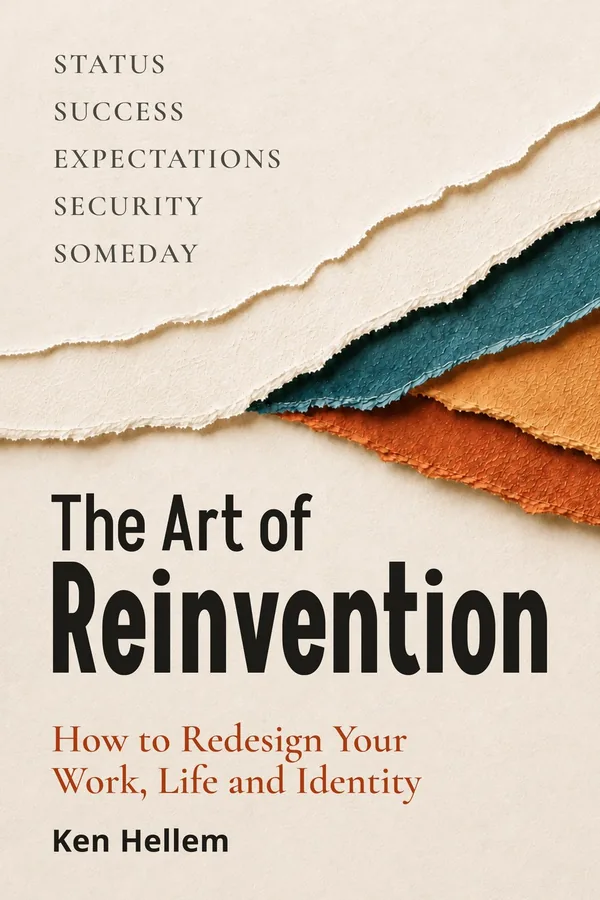
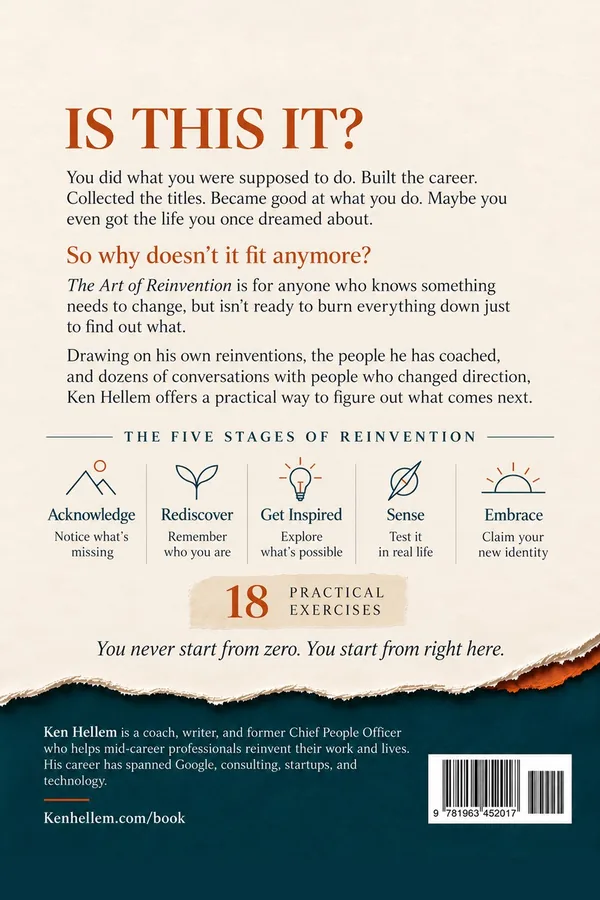 Hover for the back. Click for the book.Tap to see the book
If you want the full story and the rest of the method, you can find the book here.
Questions people often ask
What is a micro-retirement?
A micro-retirement is a planned break from work in the middle of your career. The idea comes from Tim Ferriss's "mini-retirements" in The 4-Hour Workweek: rest, travel and learn now, instead of saving it all for retirement. I add one more thing. I use the break to reflect on my life and see it from the outside.
Do I need to quit my job to take a career break?
No. In most cases I wouldn't recommend quitting your job. A sabbatical, a long vacation, a long weekend at a friend's cabin or even one quiet day can give you the time you need. What matters is that you step away from your normal days and use the time to think.
How long should a career break be?
As long as you can realistically take. I took six months in a van, and it took me a month just to stop checking work messages. My friend Johan took one week with a clear structure: half-day therapist sessions, no phone, books and a notepad. If a day is all you have, a day is enough to start.
What should I do during a career break?
Cut work email and chat, and don't fill every hour with activities. Let yourself get bored, because that is when the real thinking starts. Bring a notebook, and if you can, get support from a therapist, a coach or a trusted friend.